
Pavers Ideas
Best Edging for Pavers in South Florida
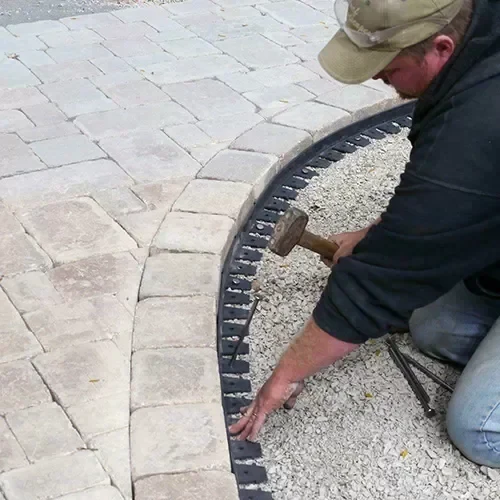
The best edging for pavers is an edge restraint designed for the pavement’s use and installed on a suitable base. Concrete and purpose-made plastic or metal systems serve different applications; decorative garden edging is not a substitute. For South Florida driveways, discuss vehicle loads, drainage and edge support before selecting the detail. See the CMHA guidance on paver edge restraints.
One of the most important stages in constructing a paver yard, pathway, or drive is installing edging. It is vital to set a border for your pavers not only because it improves their appearance but also for the structural integrity of the installation.. In this article, we will look at some different options to help you decide yourself what is the best edging for pavers.
If the perimeter is already spreading, our paver repair service can assess the edge support and affected base. For a new paver driveway, make the restraint detail part of the installation scope.
Why Use Edging
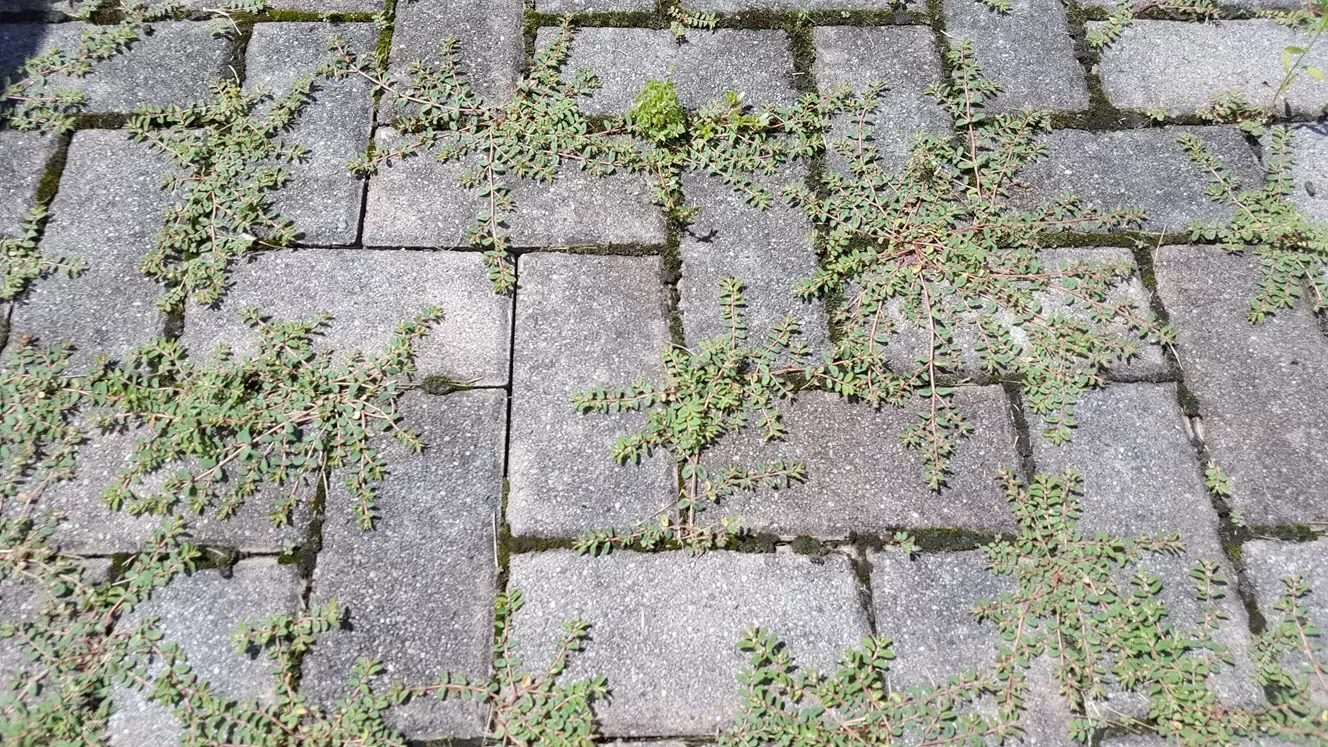
Creating boundaries for an outdoor paved area addresses some specific problems. First and foremost 一 it prevents tiles from moving and spreading, which is often caused by weather extremities, driving, walking, and ground movement. And once a few pavers tiles begin to move and spread, the process of destruction starts and it will continue like a snowball effect. Tiles crack, shift, sink, weeds and moss grow between them. So if you want to keep your garden or drive aesthetically looking nice it is better to make sure the proper edging is selected in advancebefore laying bricks or tiles. Otherwise, it would demand much headache and repair to correct paver movement
Is paver edging necessary? Of course. iframing your pathway, patio, or drive will create a stunning visual look and with the correct perimeter edge restraint in place, protect your investment and save on repair budget in the long run.
Selecting a Paver Edge Restraint
A perfect paving edge restraint does not exist 一 everything depends solely on the application or use of the paver and the sub-base you lay it on. Issues usually arise either when an edge restraint used is meant for a different application or when installation is unprofessional. Make sure edge restraints fit over your base and pay attention to its depth. There are various types of paver edging: stone, plastic, concrete, aluminum. Let’s consider the pros and cons of each material and the factors that can make you choose this or that type.
Concrete
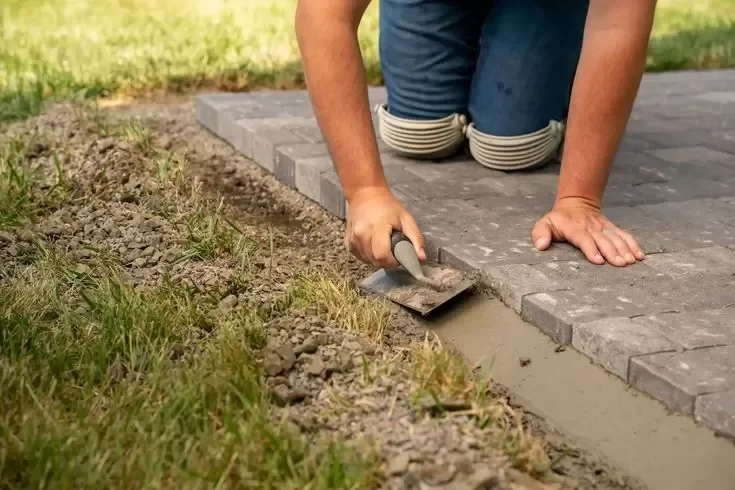
Concrete paver edging can be different: regular and with reinforcement elements. The latter is more durable. Concrete can provide a rigid edge when the detail and supporting base suit the pavement. Vehicle areas need an edge detail designed for the loads and pavement system. The main disadvantage of concrete is that it cracks over time and consequently stops performing the function of preventing paver tiles from spreading especially in freeze/thaw climates. Reinforcement and the installation detail need to suit the project; they do not guarantee that concrete will never crack. Another pro of applying concrete as edging is that it can be laid to any shape. If you have a curved pathway, it will not cause any difficulties. Installation will probably be even easier than with metal. Also, concrete restraints are not costly.
Plastic
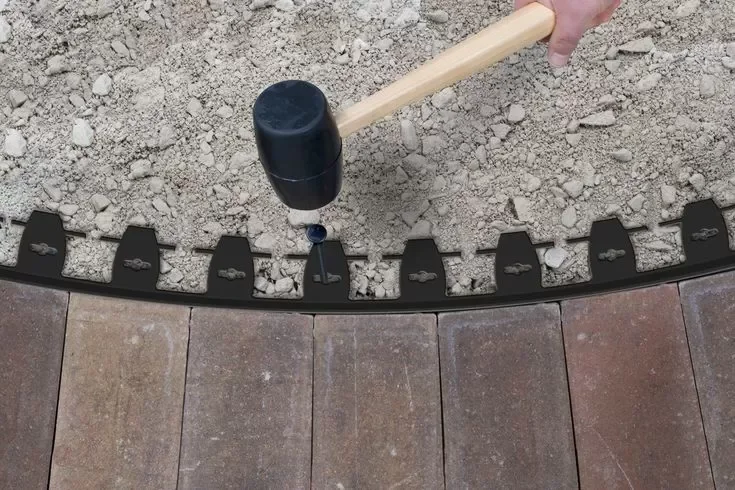
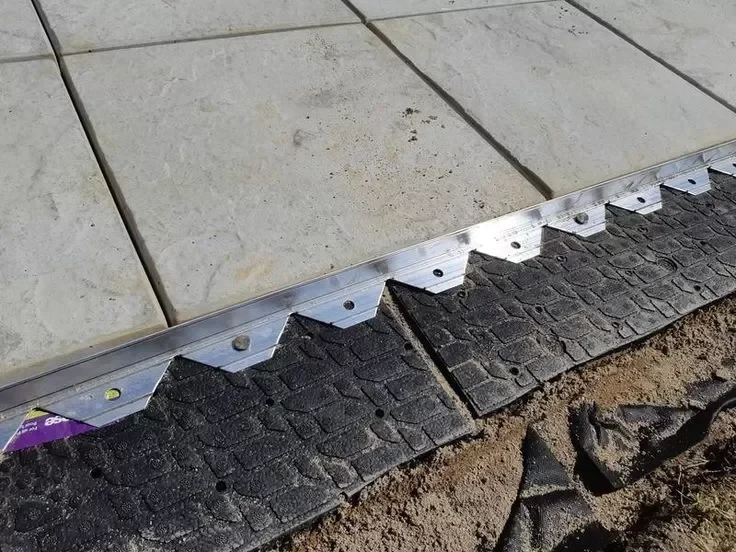
One of the most frequent choices of material for edge restraints is plastic. You can often see them in DIY stores or even notice them while walking on pavers somewhere. Plastic edge restraints do not always perform their function properly in heavily trafficked areas or in extreme weather. Severe seasonal extremities can lead to some failures. Improper compaction of the base often causes deformation of plastic framing as well 一 as the pavers sink, the edging moves too, which is no good. Also, a frequent issue is that the base is installed too high without scraping enough of the foundation layer. It causes the exposure of the supporting construction. Plastic edge restraint are installed with landscape nails or spikes driven into the sub-base and used mainly in non-vehicular appllicatoins.
Metal
This option is a bit more pricey than the plastic edging and typically used by professionals rather than DIY homeowners. But it has a big advantage as being more structurally sound than its plastic counterparts. It is also best used for straight runs rather than curved sections
Walls and Edging Stones
An existing fixed curb or wall may serve as a restraint if it is structurally suitable, at the correct level and provides continuous support to the paver edge. Do not assume every adjoining hard surface performs that role. For better retaining of paver tiles laid against a landscape bed, turf, or other , you can opt to install vertical edging stones.you can embed them into your project using concrete. You’ll need to remove the first foundation layer for your pavers and put some concrete instead. Then wet the framing stones in water for better adherence with concrete and install them. Having done these steps, you can also apply one of the restraints mentioned below for it to support both your tiles and edging stones.
Conclusion
We have given a few paver edging ideas in this article, and to choose the best material for yourself, we recommend you take into account your paver’s application, the material, base, budget, shape of a walkway, and climate you live in. Thus you will definitely select the restraint that will keep your pavers looking-good and let you avoid repairing them.